
Why Bollywood’s reaction to the NEET protests stayed so carefully worded
Film stars praised the students but not the fight

When Union Education Minister Dharmendra Pradhan resigned on July 25, following weeks of youth led protests over the NEET paper leak controversy, Bollywood did eventually show up. What is more revealing is how it showed up, and when.
A few voices spoke early, most waited
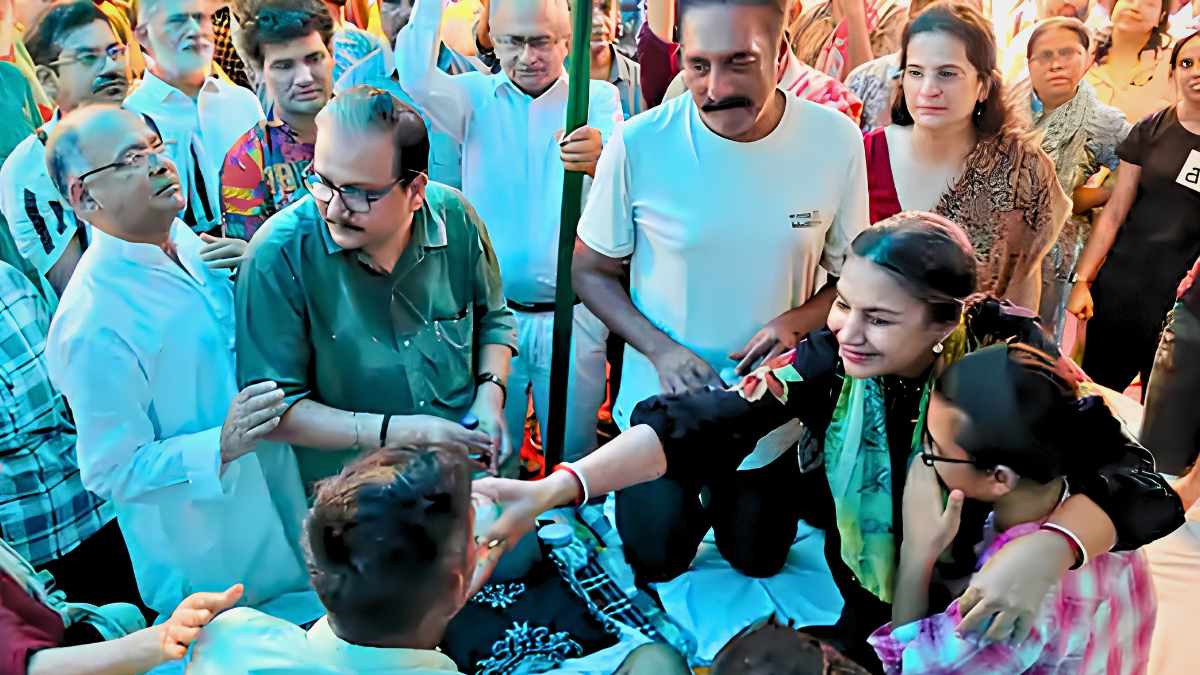
Not every actor stayed quiet while the outcome was still uncertain. Shabana Azmi was among the most consistently vocal film personalities backing the student movement throughout its run, and veteran actor Prakash Raj went further still, physically joining the demonstrations at Jantar Mantar.
Police using batons and tear gas against students marching toward Parliament earlier in the protest drew public criticism from a handful of actors and filmmakers willing to put their name behind the students while the result was still genuinely in doubt.
They were, however, the exception rather than the rule. The overwhelming majority of Bollywood’s reaction landed only after Pradhan’s resignation was already confirmed, once the outcome carried no risk attached to it.
What the reactions actually said
Look closely at the wording once the celebrations did arrive, and a pattern emerges. Alia Bhatt, Zoya Akhtar, Sonakshi Sinha, Priyanka Chopra Jonas, Dia Mirza, Vaani Kapoor, Vikramaditya Motwane, Swara Bhasker and Twinkle Khanna all posted publicly, but the tone leaned overwhelmingly toward praising the students rather than criticising the government that had appointed the minister in the first place.
Azmi told PTI she was proud of the youth and thanked them for showing that the Constitution remains the country’s greatest strength, a message built around admiration for young people rather than pointed criticism of the administration.
Sonakshi Sinha’s video, in which she jokingly apologised for underestimating Gen Z, followed the same pattern, warm, celebratory and squarely focused on the students rather than the minister or the party he represented.
That is a notably different register from how opposition politicians spoke through the same crisis. Congress leaders had accused the BJP and RSS of infiltrating the education system, opposition MPs had demanded Pradhan’s sacking on the record for weeks, and effigies of the minister had been burned at party protests in states including Jharkhand and Odisha.
Bollywood’s messaging, by contrast, largely avoided naming the government, the party or the minister directly in any critical sense, choosing instead to frame the moment as a victory for young people and Indian democracy in the abstract.
Why the caution makes sense from where they sit
None of this is particularly surprising once the commercial reality is considered. Film releases depend on smooth relationships with certifying bodies, state governments and, increasingly, a political environment that can make life difficult for anyone seen as openly adversarial toward the ruling party.
Publicly celebrating a resignation after it has already happened costs a star very little. Publicly demanding that resignation while the government is still resisting it is an entirely different calculation, one that risks alienating audiences, inviting official friction or simply picking a fight.
Azmi and Prakash Raj, both actors with long standing reputations for outspoken political engagement built up over decades, had less to lose on that front than performers still building or protecting a broader commercial audience.
A contrast that says something about the industry
Set against Tollywood, where major stars including Allu Arjun, Jr NTR, Ram Charan, Prabhas, Mahesh Babu, Chiranjeevi, Nagarjuna and Vijay Deverakonda offered no public comment at all even after the resignation, Bollywood’s eventual, carefully worded celebration looks almost bold by comparison.
It was not silence. It was calibration, a response shaped less by conviction arriving late than by timing chosen to minimise risk, arriving once the safest possible moment to speak had presented itself.
The sum up
Bollywood was not entirely silent during the NEET protests, with Shabana Azmi and Prakash Raj notably vocal and visible before Dharmendra Pradhan’s resignation. Most of the industry’s reaction, however, arrived only after the resignation was confirmed, and even then focused on praising students rather than directly criticising the government, a markedly more cautious posture than that taken by opposition politicians throughout the same period.