
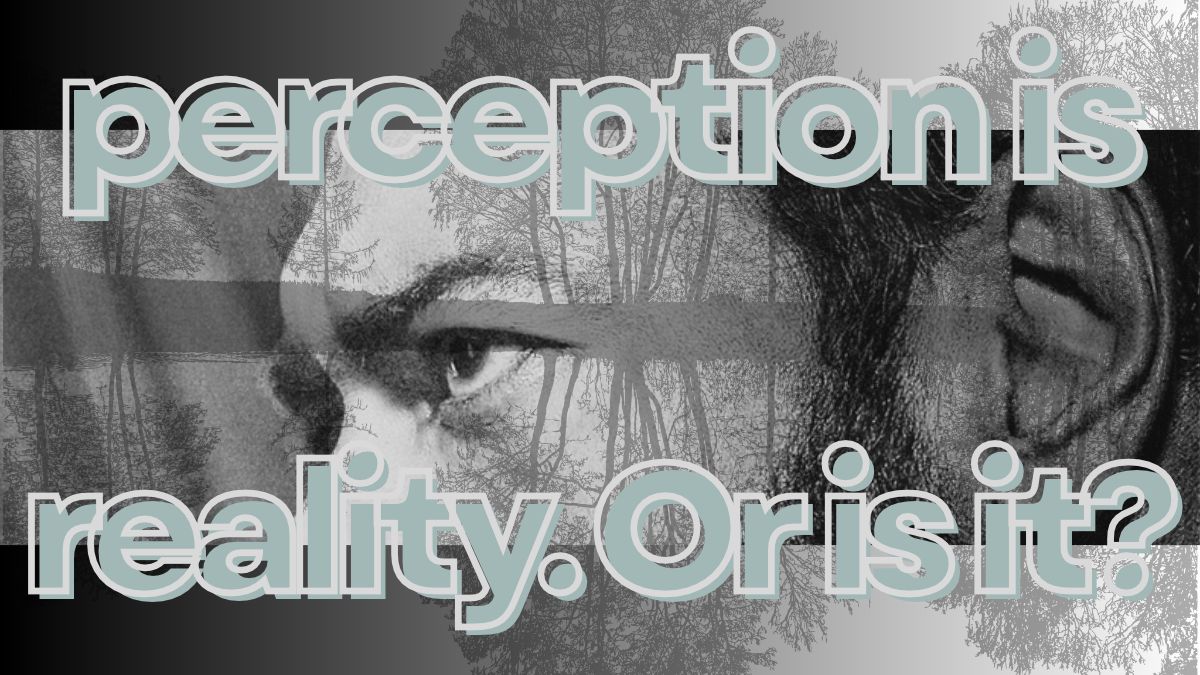

The Hindi thriller’s game of appearances, suspicion and carefully guarded secrets offers a compelling lens through which to examine Bollywood PR guru Dale Bhagwagar’s philosophy that perception can shape how people understand reality.
In a world where a single piece of information can change the way an entire situation is understood, what people believe is not always the same as what actually happened. Few cinematic stories illustrate this tension as effectively as the ‘Drishyam’ franchise, which has repeatedly challenged audiences to question what they see, what they hear and what they think they know.
The Hindi film ‘Drishyam 3: The Conclusion’, starring Ajay Devgn, Tabu and Jaideep Ahlawat, brings this conflict back into focus. Released on 2 October 2026, the film continues the story of Vijay Salgaonkar, a family man whose efforts to protect his loved ones have placed truth, suspicion and the interpretation of evidence at the heart of the narrative.
The themes resonate with the professional philosophy of Bollywood PR guru Dale Bhagwagar, founder of Dale Bhagwagar Media Group, established in 1997 as India’s first Bollywood PR agency. His guiding thought, “We are living in a world where perception is reality”, captures a central challenge of public relations: people form opinions not simply from facts, but from the meaning they attach to the information available to them.
For Bhagwagar, whose work has helped shape the development of professional entertainment publicity in India, perception is more than an abstract idea. It is a powerful influence on how celebrities are understood, how reputations develop and how public narratives take hold. The connection with ‘Drishyam 3’ is an independent editorial observation, not a suggestion that he worked on the film or that its makers drew inspiration from his philosophy.
When appearances become a powerful narrative
The defining appeal of the ‘Drishyam’ franchise lies in its ability to make viewers question their own judgement. Vijay Salgaonkar is not simply a man caught in a web of suspicion. He is a character whose actions, explanations and carefully constructed circumstances force others to decide what they believe happened.
In such a story, information does not speak for itself. It is interpreted through existing suspicions, emotional loyalties and the apparent credibility of the people involved. The same event can produce entirely different conclusions depending on which details an observer knows, which details remain hidden and what they already believe.
That is where the connection with Bhagwagar’s philosophy becomes particularly interesting. Perception can influence the conclusions people reach even when the underlying facts have not changed.
The Hindi film’s predecessor, ‘Drishyam 2’, established how an apparently ordinary family could become the centre of an extraordinary investigation. The third instalment builds on the consequences of that history, bringing renewed scrutiny to the family’s past. The suspense comes not merely from discovering what happened, but from questioning whether the available evidence tells the complete story.
The distinction matters. A perception is not necessarily a lie, and it is not necessarily the truth. It is an interpretation that can be accurate, incomplete or mistaken.
This is what makes a suspense thriller such a fitting illustration of the idea. The audience, like the characters, is constantly evaluating information and revising its understanding. A revelation can change the meaning of an earlier scene without changing the scene itself.
The Bollywood PR connection
In celebrity public relations, the same underlying principle operates in a different setting.
An actor’s public image is formed through a combination of performances, interviews, public appearances, news coverage, personal disclosures and the stories that circulate around them. People rarely have access to the complete private reality of a public figure. Instead, they assemble an impression from the information they encounter.
Bhagwagar’s career has centred on this relationship between information, image and public opinion. His agency’s published material describes his work across celebrity image-building, branding, media publicity and crisis management. His professional commentary has also stressed the importance of sustained image-building rather than relying on temporary publicity or short-lived hype.
Consider how the same public incident might be interpreted in two different ways. One person might see a celebrity’s silence as an admission of guilt. Another might view it as restraint in a sensitive situation. A third might reserve judgement until reliable information becomes available.
The underlying event remains the same, but the interpretations differ. This is why public relations involves more than obtaining media coverage. It also involves helping people understand the context surrounding a person, a decision or an event. Clear communication can correct misunderstandings, while inconsistent statements or incomplete explanations can deepen suspicion.
However, there is an important distinction between managing perception and manufacturing a false impression. Responsible PR should make relevant facts clearer, provide context and protect a person’s reputation from demonstrably inaccurate claims. It should not depend on fabricating evidence or misleading the public.
The ‘Drishyam’ story is built around a fictional struggle in which the interpretation of evidence becomes central to the characters’ fate. Real-world reputation management must operate within ethical and factual boundaries that a thriller’s dramatic premise does not necessarily follow.
Why reputation can outlast a single incident
A person’s reputation is rarely determined by one event alone. It develops over time, as people connect individual incidents with what they already think they know about that person.
An established public image can influence how new information is received. A person considered trustworthy may initially be given the benefit of the doubt. Someone already viewed with suspicion may find that even an ambiguous incident reinforces existing doubts.
This is not proof that public opinion is always irrational. Past behaviour can be relevant evidence. The problem arises when an established impression becomes so powerful that contradictory information is dismissed automatically.
The principle extends beyond celebrities. Businesses, political leaders, institutions and ordinary individuals all experience situations in which the interpretation of their actions affects the response they receive.
A company facing criticism, for instance, may find that a technically correct statement fails to reassure customers if its previous conduct has damaged trust. Conversely, an organisation that has consistently communicated honestly may find it easier to explain an isolated mistake.
In both cases, perception is shaped by more than the immediate facts. History, credibility and expectations influence the way those facts are understood.
For a publicist, this makes consistency important. A carefully constructed image cannot rely indefinitely on a single successful headline or a brief burst of attention. It needs to be supported by credible communication and behaviour that does not continually contradict the impression being presented.
The audience is part of the equation
The success of ‘Drishyam’ also depends on the audience’s willingness to participate in the story.
Viewers develop theories, identify possible motives and assess the reliability of what they see on screen. Their experience of the film is shaped by anticipation and by the assumptions they bring to each new revelation.
The Hindi ‘Drishyam 3: The Conclusion’ has attracted considerable commercial attention since its release on 2 October 2026. Reporting by The Indian Express placed its worldwide gross at approximately ₹366.5 crore by its sixth day, while subsequent box-office reporting indicated that the film had crossed ₹400 crore worldwide by its eighth day. These are reported collection estimates, rather than independently audited figures.
Commercial success does not, by itself, prove that audiences agree with a particular philosophy. Nor does it establish that the filmmakers intended to communicate Bhagwagar’s viewpoint. It does, however, demonstrate the continuing appeal of a franchise built around suspense, uncertainty and the tension between what appears to be true and what may actually be true.
The film’s reception has not been entirely uniform. Reviews have differed over the effectiveness of its storytelling and the strength of its conclusion, a reminder that even a widely watched film can generate different interpretations among critics and viewers.
That difference of opinion reinforces another aspect of the perception debate. There is no guarantee that presenting the same material to different people will produce the same response.
In entertainment, this diversity of interpretation can make a film more engaging. In public life, it can make communication more challenging.
Perception is powerful, but reality still matters
There is a potential misunderstanding in the phrase “We are living in a world where perception is reality”. Taken literally, it might suggest that objective facts do not matter, or that any impression can be made true simply by persuading enough people to believe it.
That would be an oversimplification. Perception can shape social consequences without changing the underlying facts. A false allegation can damage a reputation even if it is eventually disproved. A misleading impression can influence a decision even when better evidence exists. Yet neither outcome transforms the original allegation or impression into objective truth.
The more useful interpretation of Bhagwagar’s philosophy is that perception has real-world power because people act on what they believe to be true.
This distinction is crucial to ethical public relations. The aim should not be to replace reality with an attractive story. It should be to ensure that the available information is understood fairly, that misleading impressions are challenged and that a person’s actions are not reduced to a single incomplete narrative.
For celebrities, that can mean building a reputation through sustained work and credible communication. For organisations, it can mean responding transparently when problems arise. For individuals, it can mean recognising that a first impression may not reveal the whole story.
It also places a responsibility on audiences and the media. Before accepting a compelling narrative, it is worth asking what evidence supports it, what information might be missing and whether an initial interpretation has been mistaken for an established fact.
A lasting lesson from ‘Drishyam 3’
The enduring appeal of the ‘Drishyam’ franchise lies in its reminder that seeing something and understanding it are not necessarily the same.
A detail can be overlooked. An explanation can be accepted too quickly. A belief can become so firmly established that alternative interpretations seem impossible. And a revelation can force people to reconsider what they thought they understood all along.
These are the very tensions that make perception relevant to public relations, reputation management and everyday human relationships.
For Bhagwagar, the phrase “We are living in a world where perception is reality” expresses a principle that extends well beyond the film industry. His agency has published the quotation on its own website, providing a verifiable record of its association with his professional philosophy.
The distinction between perception and reality remains important precisely because the two do not always coincide. Yet perceptions influence trust, decisions, relationships and reputations, sometimes long before the complete facts become clear.
‘Drishyam 3’ offers a timely reminder of that tension through the language of cinema. Bhagwagar’s philosophy offers a way to understand its wider significance.
Ultimately, the lesson is not that perception should replace truth. It is that truth does not always speak for itself, and the way information is presented, interpreted and believed can profoundly affect what happens next.
In cinema, that tension creates suspense. In public relations, it shapes reputations. In everyday life, it can determine whether people trust, doubt, accept or reject one another.
And that is why the thought remains relevant: “We are living in a world where perception is reality.”