
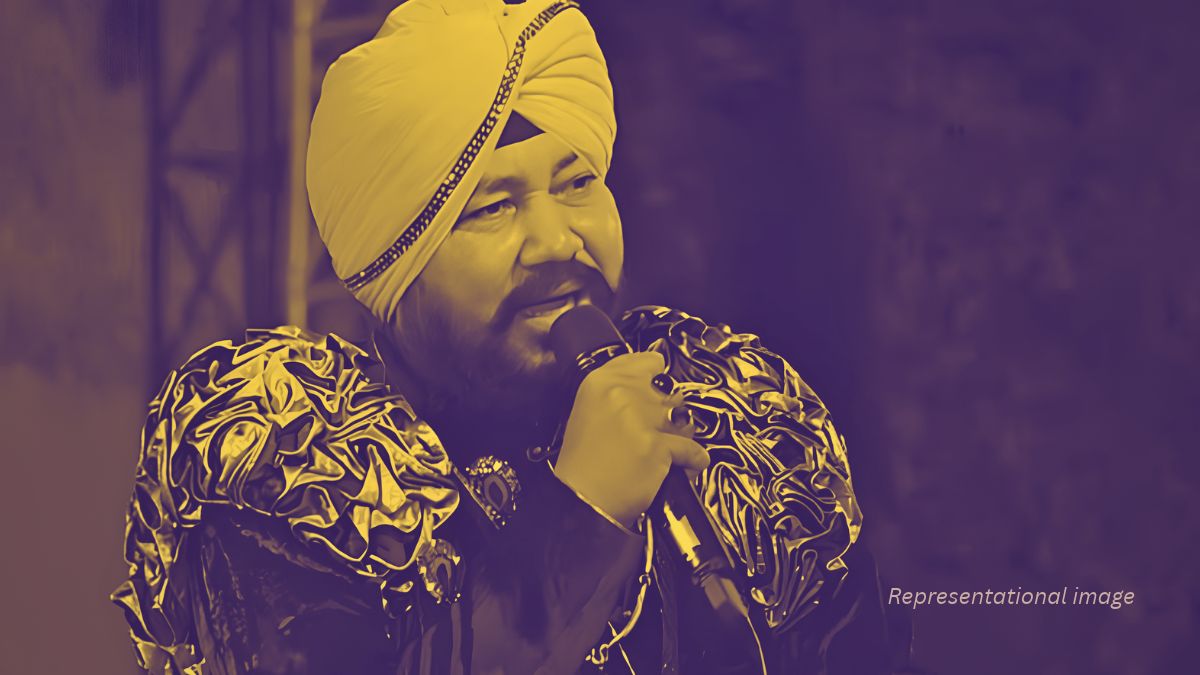
Long before the Uttarakhand controversy, Daler Mehndi had faced a Mumbai media boycott in the late 2000s
The recent controversy surrounding Daler Mehndi’s performance in Uttarakhand, which reportedly involved a disagreement with state minister Subodh Uniyal and brought questions about the singer’s conduct and professional commitments into the spotlight, has drawn attention to how incidents involving the artiste can develop into larger public relations challenges.
Interestingly, this is not the first time Mehndi has found himself in an uncomfortable situation involving people from outside his immediate professional circle. Back in the late 2000s, a press conference in Mumbai reportedly triggered a confrontation with the city’s entertainment media, eventually leading to what was described at the time as a collective boycott of the singer.
The incident began when Mehndi reportedly arrived several hours late for a scheduled corporate press conference at a hotel ballroom in Mumbai. The event had been organised by a corporate PR agency, whose team was responsible for coordinating the press conference and handling the journalists present. According to accounts of the episode, journalists waiting for the singer had repeatedly been told that his flight to Mumbai was delayed. However, as the hours passed, frustration continued to mount, with the event’s corporate PR team reportedly doing little to pacify the waiting journalists or adequately address their concerns.
The situation took a further turn when a senior journalist reportedly learnt that Mehndi had gone to his hotel room to have food before coming downstairs to address the waiting media. According to accounts of the incident, word quickly spread among the journalists gathered at the hotel. Many were reportedly enraged by the development, interpreting it as a sign that the singer did not value their time after keeping them waiting for several hours.
When Mehndi eventually arrived, matters reportedly deteriorated further. Some accounts of the incident suggested that the singer displayed a flippant attitude towards the journalists rather than acknowledging their frustration. The situation soon reached a breaking point, with journalists staging a walkout.
What followed was an unusually strong reaction from sections of Mumbai’s entertainment media fraternity. According to accounts of the episode, journalists representing print, television and online media came together in a collective boycott of the singer. For an artiste whose public visibility depended considerably on media coverage, this represented a significant publicity challenge.
At the time, Bollywood publicist Dale Bhagwagar was separately handling Mehndi’s media relations. He had not organised the corporate press conference or been responsible for the arrangements that preceded the confrontation. However, following the reported boycott, his involvement shifted towards managing the resulting media relations crisis.
Bhagwagar subsequently began reaching out to prominent journalists individually. A strategy of arranging exclusive one-on-one interviews with influential media personalities was reportedly put into motion. Rather than attempting to secure a single collective reconciliation with the aggrieved media fraternity, the strategic PR approach relied on reopening individual channels of communication and gradually getting the singer back into news coverage.
The interviews subsequently began appearing in different publications and media outlets. Over time, the boycott appeared to lose momentum, with Mehndi gradually regaining media visibility.
There was also a clear public relations calculation behind the approach. Exclusive interviews offered journalists direct access to the singer while giving his publicity machinery an opportunity to rebuild media engagement. At the same time, the renewed coverage helped shift attention away from the original confrontation. However, restoring media access was not necessarily the same as addressing the grievances that had triggered the boycott.
The episode offers an interesting historical parallel to the current Uttarakhand controversy. The two incidents were different in nature and involved different sets of people. One concerned a reported disagreement with a state minister, while the other arose from an interaction with journalists. Yet both illustrate how situations involving a high-profile artiste can extend beyond the immediate incident and develop into wider questions about professional conduct, public perception and reputation management.
For Mehndi, the late-2000s episode demonstrated that even an established music career could not insulate an artiste from professional and reputational setbacks. For Mumbai’s journalists, it was an instance of collective displeasure eventually giving way to renewed individual engagement. And for the publicity professionals involved, it was a reminder that managing the aftermath of a controversy can sometimes be just as challenging as managing the event that triggered it.