
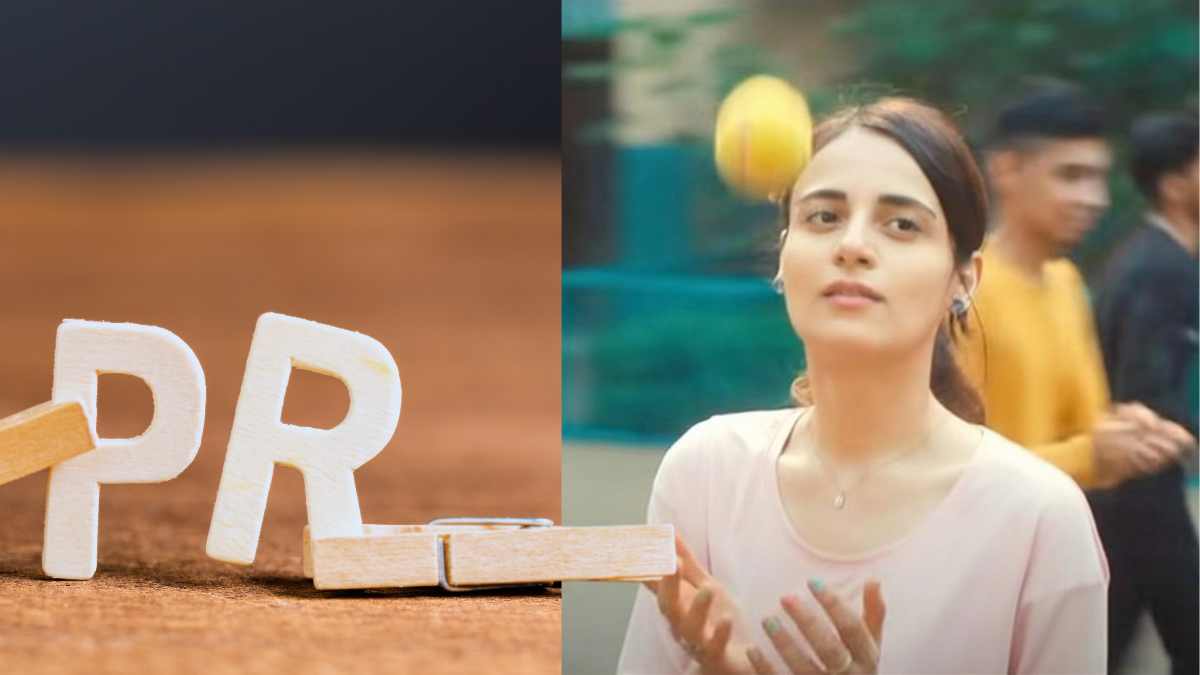

There is a familiar rhythm to Bollywood conversations. Every few months, an actor speaks up against PR. The industry nods, the audience applauds the honesty, and then the Bollywood PR machinery rolls on exactly as before. This time, it is Radhikka Madan stepping into that fashionable cycle, calling out what she describes as the growing culture of “paid negative PR” in the film business.
Her words are not accidental. They arrive at a moment when perception has become as important as performance, and sometimes, more engineered than earned.
Madan did not mince her thoughts. In a recent interview, she openly criticised the idea of pulling others down to rise. “You can never rise by pulling someone down,” she said, framing the issue not just as an industry flaw but as a mindset problem.
She went further, almost spiritual in tone, rejecting the insecurity that fuels such tactics. “May God never give me so much insecurity that I have to pull someone down,” she added, drawing a clear moral boundary between ambition and sabotage.
This is not just a casual remark. It is a direct indictment of a system that many insiders acknowledge but few articulate on record.
The idea of “negative PR” is hardly new. What has changed is its scale and sophistication. Earlier, rivalry played out through gossip columns and planted stories. Today, it extends into coordinated trolling, anonymous social media narratives, and subtle reputation engineering. Madan alluded to this shift, noting how PR, while useful, is increasingly used to “tarnish the reputation of actors or degrade a film.”
Her observation cuts to the core of a quiet industry truth. PR is no longer just about building visibility. It is also about controlling conversations, and sometimes, distorting them.
Yet, there is a contradiction that sits at the heart of this debate. Actors benefit from PR even as they criticise it. Careers are shaped by visibility cycles, media placements, and narrative positioning. The same ecosystem that can allegedly manufacture negativity is also responsible for amplifying success, creating stars, and sustaining relevance.
Madan seems aware of this duality. She does not reject PR entirely. Instead, she draws a line between constructive publicity and destructive strategy. Her emphasis is on coexistence rather than competition. “There isn’t space for just one person at the top,” she said, pushing back against the scarcity mindset that often drives industry rivalries.
It is an idealistic view, but also a strategic one. In an industry driven by perception, positioning oneself as above the fray can itself become a powerful narrative.
What makes her stance interesting is timing. Madan is coming off strong performances, including her work in ‘Subedaar’, which has earned her critical appreciation and backing from filmmakers.
This is often when actors feel confident enough to speak. When validation comes from the work, the need to rely on aggressive PR diminishes, at least publicly.
Still, the pattern remains consistent across Bollywood. Actors periodically distance themselves from PR excesses, especially the darker side of it. It serves multiple purposes. It signals authenticity. It aligns them with audience fatigue around manufactured narratives. And importantly, it creates a moral high ground in an industry where perception battles are constant.
But here is the uncomfortable reality. Some of the negative PR exists because it works. It shapes conversations, influences audience sentiment, and occasionally alters the trajectory of films and careers. If it did not, it would have disappeared long ago.
Madan’s comments, therefore, do not dismantle the system. They expose it, briefly, before it fades back into the background.
What remains is the tension between art and optics. Between talent and narrative. Between organic growth and engineered visibility.
Radhikka Madan has chosen her side, at least in words. She stands for merit, positivity, and space for everyone. It is a position that sounds ideal, even refreshing.
Whether Bollywood follows it is another story entirely.